Therapeutic Use of Botulinum Toxin
At Orchard House Dental Care in Northallerton, we offer consultation-led treatment using botulinum toxin for certain therapeutic indications, including teeth grinding (bruxism), chronic migraine and tension-related headaches, and excessive sweating (hyperhidrosis).
These conditions are often associated with overactive muscles or nerve signalling and can significantly affect comfort, sleep and quality of life. Following a detailed clinical assessment, treatment with a prescription-only medicine may be recommended where appropriate.
Individual outcomes vary, and suitability is determined at consultation.
What Is Botulinum Toxin Treatment?
Botulinum toxin (commonly known by brand names such as Botox®) is a prescription-only medicine. It works by temporarily reducing excessive muscle activity or blocking certain nerve signals in targeted areas.
When administered by appropriately trained clinicians with detailed knowledge of facial and head-and-neck anatomy, it may help relieve muscle tension and reduce associated symptoms.
All treatment decisions are made following a full medical history and assessment.
Teeth Grinding & Jaw Clenching (Bruxism)
Targeted injections into the masseter muscles (the primary chewing muscles) may help reduce excessive clenching and grinding.
This can:
• Reduce jaw tension and discomfort
• Help limit further tooth wear
• Decrease strain on the jaw joint (TMJ)
• In some cases, soften a hypertrophic jawline
Improvement is typically noticed gradually over 1–2 weeks. Effects are temporary and may last several months before reassessment is required.

Chronic Migraine & Tension-Related Headaches
For some patients experiencing chronic migraine or tension-type headaches, carefully placed injections may help reduce muscle-related triggers in the head and neck.
Treatment protocols are selected based on clinical assessment, and patients are advised regarding realistic expectations and potential risks.
Excessive Sweating (Hyperhidrosis)
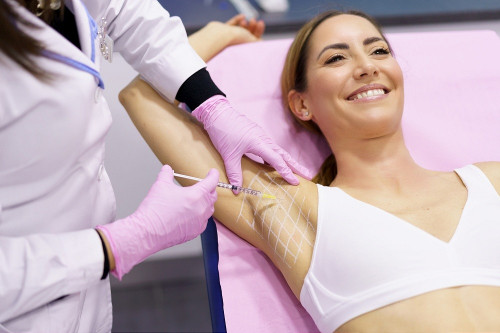
Botulinum toxin may also be used to manage localised hyperhidrosis (excessive sweating), particularly in areas such as the underarms.
The treatment works by temporarily blocking the nerve signals that stimulate sweat glands. Results typically develop within 1–2 weeks and are temporary, with effects lasting several months in many cases.

 .
.